

From First Impressions to Lasting Observations: The Universal Language of Faces
We are always “reading” faces—from the intuitive judgments of a first meeting to the deeper observations that come with time and familiarity. In the East, this ancient practice is known as face reading or physiognomy. In the West, it has evolved into fields like modern psychology and neuroscience. This isn’t about fortune-telling; it’s the fascinating crossroads of age-old human observation and biological science.
In this article, we’ll visually unpack the “Eastern and Western dialects” of facial features and guide you through a thoughtful exploration of the personality clues—and the science—that lie behind every face.
Part 1: A Side-by-Side Look at Facial Features—East vs. West
We’ll take the most telling facial features and compare them side by side, using clear visuals and charts to show how Eastern and Western traditions interpret the same traits differently.
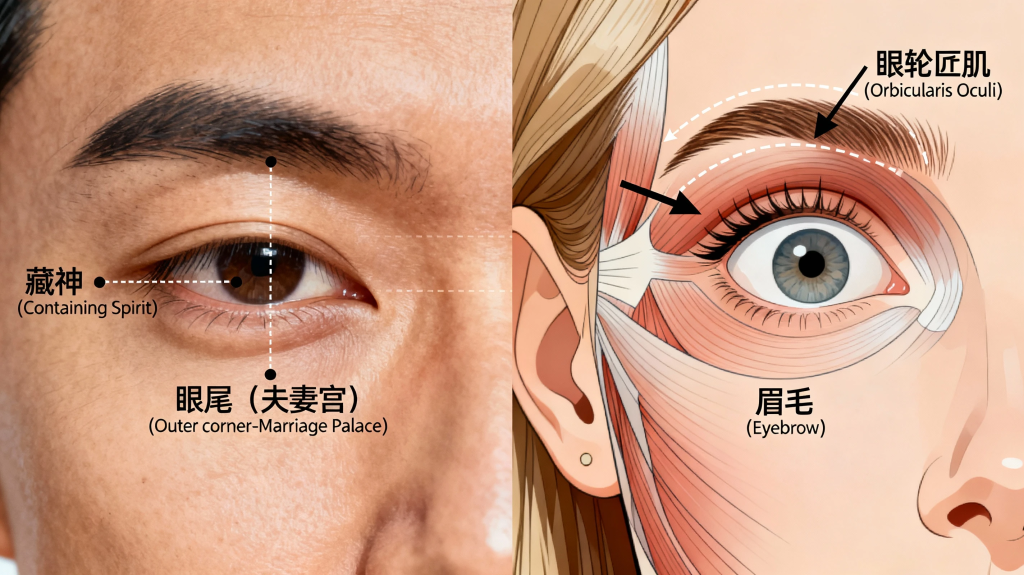
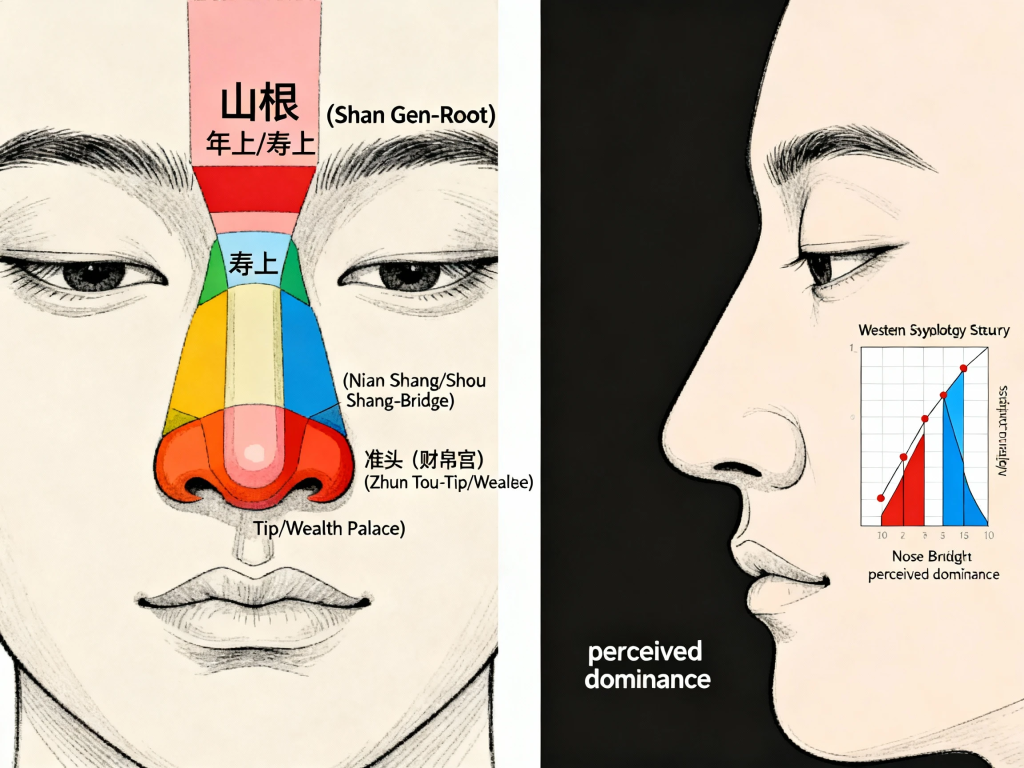
| Perspective | Eastern (Physiognomy) Interpretation | Western (Psychology/Biology) Interpretation |
| Core | Known as the “Judge of Character,” governing self-esteem, decisiveness, and wealth potential. | The central pillar of the face; supports breathing, filters air, and influences vocal resonance. Its prominence affects overall facial balance and perceived strength. |
| Shape | A straight, well-proportioned nose: upright character, clear judgment. A hooked or curved nose: shrewd, strategic thinking. | Shape is determined by genetics, nasal bone structure, and cartilage. Cultural and social environments may associate certain shapes with traits like authority or refinement, though these are not scientifically fixed. |
| Bridge | A high, straight bridge: strong willpower, leadership qualities. A low or flat bridge: gentle, cooperative nature. | The nasal bridge is formed by bone and cartilage. Its height and contour relate to ethnic ancestry, individual development, and structural support for the upper face. |
| Tip | Referred to as the “Wealth Palace”; a full, rounded tip suggests generosity and material comfort. A sharp, thin tip may indicate precision or frugality. | The tip consists of flexible cartilage. Its size and shape influence airflow and aesthetic appearance, with some associating a defined tip with perceived decisiveness or refinement. |
Nose: East vs. West
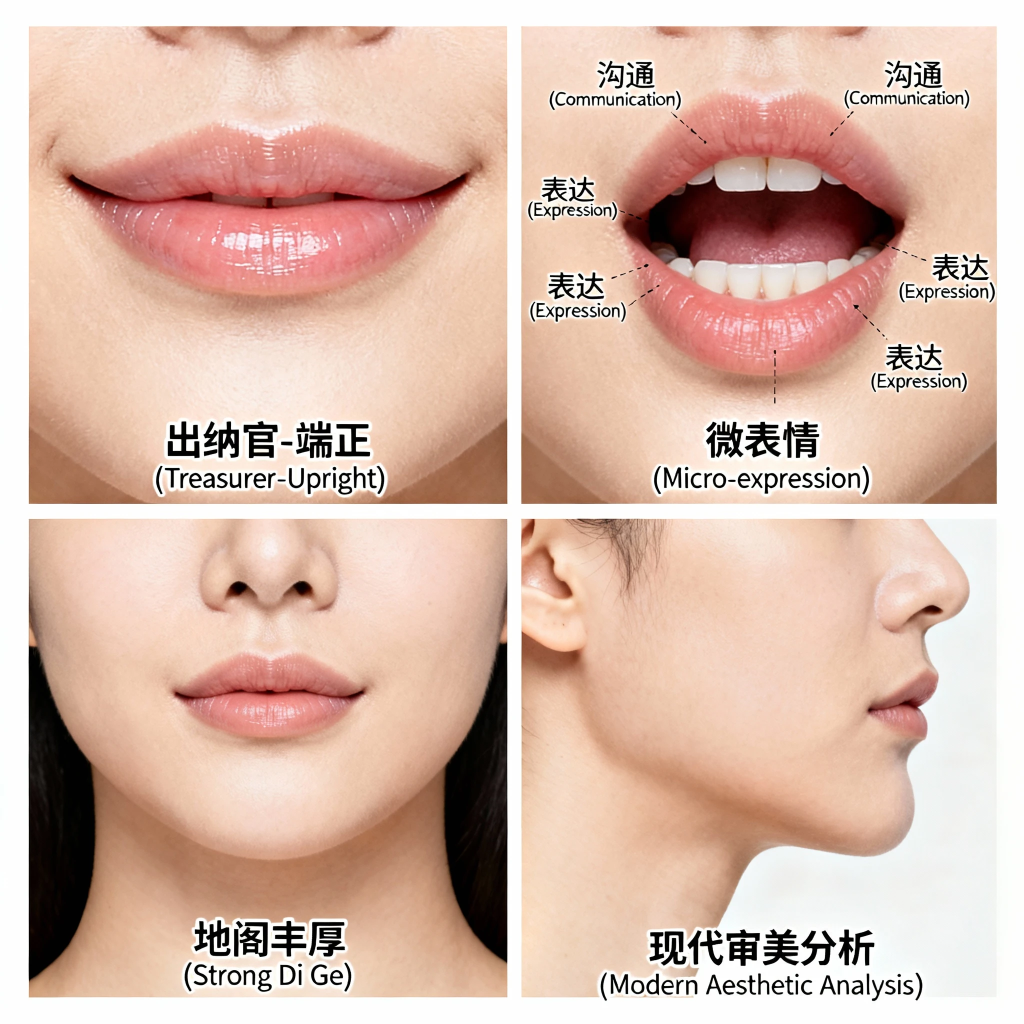
| Perspective | Eastern (Physiognomy) Interpretation | Western (Psychology/Biology) Interpretation |
| Core | The mouth is seen as the “Portal of Expression”, reflecting communication style and social fortune. The chin is considered the “Anchor of Will”, indicating persistence and later-life stability. | The mouth serves as the primary tool for speech, expression, and intake. The chin forms the foundation of the lower face, structurally supporting the jaw and influencing profile balance. |
| Shape | A well-defined, moderate-sized mouth is viewed as ideal for clear and balanced communication. A persistently downturned mouth may suggest a tendency toward criticism or pessimism. | Lip and mouth shape vary widely due to genetics and muscle use. Habitual expressions, such as frequent smiling or tightening, can gradually influence the visible shape of the mouth over time. |
| Lips | Full lips are often associated with warmth, generosity, and affection. Thinner lips are sometimes linked to precision, self-control, or a more reserved nature. | Lip fullness is influenced by genetics, volume of connective tissue, and age. Biologically, lips play key roles in articulation, sensory reception, and nonverbal signaling. |
| Chin | A broad, prominent chin is thought to reflect strong willpower and decisiveness. A receding or less defined chin may be interpreted as gentleness or adaptability. | Chin shape is determined by mandible development and genetics. In some studies, a pronounced chin has been loosely correlated with perceptions of assertiveness or resilience in social psychology. |
Mouth & Chin: East vs. West
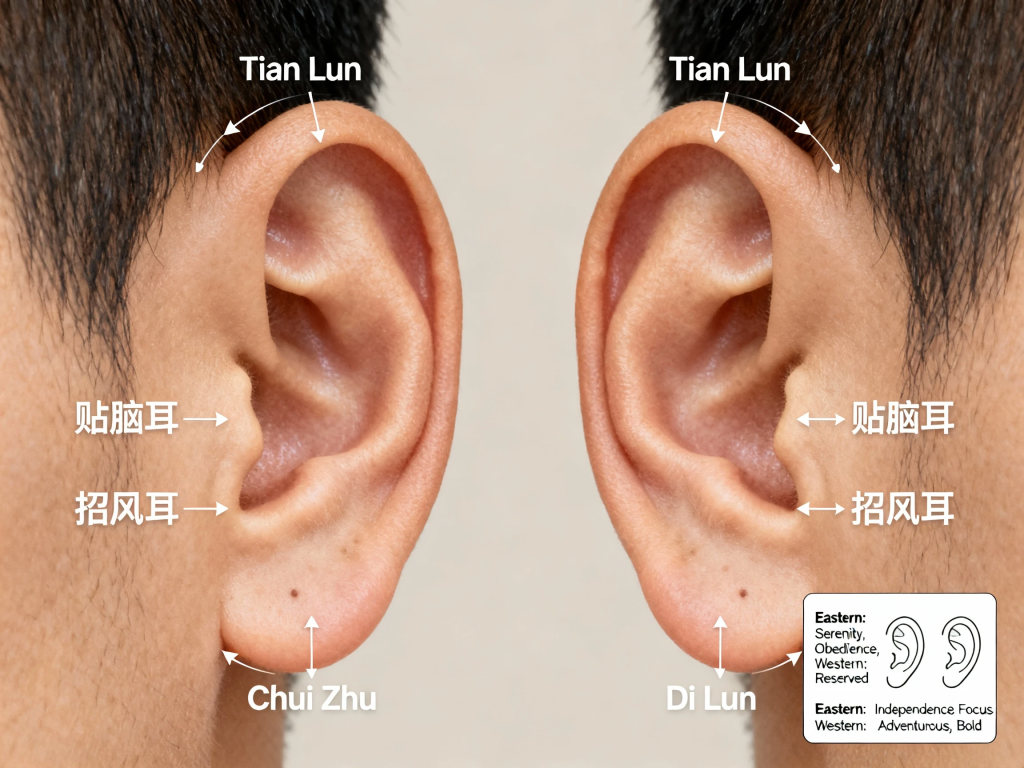
| Perspective | Eastern (Physiognomy) Interpretation | Western (Psychology/Biology) Interpretation |
| Core | Known as the “Information Receiver”, linked to wisdom, health, and early-life fortune. It is considered an indicator of innate potential and vitality. | Primarily the organ of hearing and balance. In psychology, its visibility and structure can subtly influence perceptions of attentiveness or age. |
| Size & Shape | Large, thick ears: Associated with vitality, longevity, and a receptive nature. Small, thin ears: May suggest delicacy or sharper focus. | Size and shape are largely determined by genetics and cartilage development. Evolutionary psychology sometimes links distinct ear shapes to ancestral adaptations, though no firm conclusions exist. |
| Lobe | A full, fleshy lobe is seen as a sign of good fortune, generosity, and comfortable later years. Attached or minimal lobes may be linked to practicality or independence. | Earlobes vary widely (free vs. attached) and are genetically inherited. While sometimes studied in relation to certain health markers, no consistent personality correlation is scientifically established. |
| Position & Angle | Ears set high (above eyebrow line): Thought to indicate intelligence and ambition. Ears set significantly low: May be associated with a grounded, steady temperament. | Ear placement is influenced by cranial development. From a social perception standpoint, ears that are very prominent or angled differently can occasionally draw attention but are not reliably tied to specific traits. |
Ears: East vs. West
| Perspective | Eastern (Physiognomy) Interpretation | Western (Biology/Culture) Interpretation |
| Core Function | Called the “Listener”, believed to relate to wisdom, blessings, and fortune in early life. | Primarily the organ for hearing. Its shape is largely determined by genetics and isn’t strongly tied to other facial features. |
| Size & Position | Large, thick ears close to the head: Seen as a sign of intelligence, good listening skills, and fortune. Small, thin, or protruding ears: Associated with strong curiosity, and sometimes, a more independent or rebellious nature. | Size and position are genetic. In some Western cultures, noticeably protruding ears can sometimes lead to childhood teasing, but there’s no scientific basis linking them to personality. |
| Earlobe | Large, fleshy earlobes: Traditionally viewed as symbols of good fortune, longevity, generosity, and comfort in later years. Attached or thin earlobes: Not considered better or worse, but may be linked to quick thinking. | Earlobe type (attached or free) is a classic example taught in genetics. The cultural association of large lobes with “good fortune” is primarily found in East Asian societies. |
Part 2: Where Science Weighs In: Is There Truth to “Judging a Book by Its Cover”?
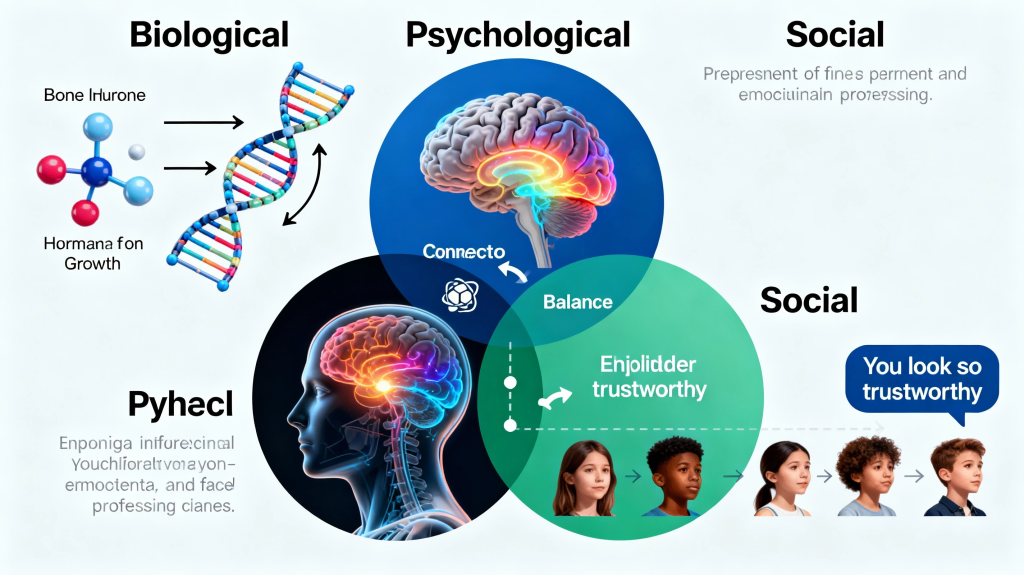
1. The Genetic Link: Shared Pathways for Face and Behavior
Our facial features are fundamentally shaped by our genes. Interestingly, some of the same genes that influence physical development may also subtly affect our temperament. For example, genes involved in hormone regulation can influence both the development of your jawline and certain behavioral tendencies, like a preference for risk-taking. This isn’t a strict “cause and effect,” but rather points to a possible biological correlation between appearance and personality.
2. The Face as a Living Record: How Emotions Leave Their Mark
This is perhaps the strongest scientific connection. Our long-term emotional habits literally shape our faces. Chronic stress, for instance, can lead to sustained tension in certain muscles, etching frown lines or deepening folds. Conversely, a frequently used smile strengthens specific muscles, creating “laughter lines” that naturally make a person’s resting expression appear warmer and more approachable. In this way, the old saying “your face reflects your inner state” captures a real, dynamic physical process.
3. The Feedback Loop of Perception and Behavior
The initial judgments people make based on appearance—however superficial—can shape social reality. How others treat us, based on those first impressions, can, in turn, influence who we become. Someone with a “baby face” might constantly be given simpler tasks, which could lead them to act out or overcompensate to be taken seriously. Someone with a stern look might be approached with caution, potentially reinforcing a more reserved demeanor. In short, the expectations our faces trigger in others can become a self-fulfilling prophecy, continuously molding our expressions and social style over time.
Part 3: Thinking Rationally: A Map Is Not the Territory

• Think of It as a Guide, Not a Rulebook.
Face reading offers clues about tendencies, not a fixed fate. Your own education, choices, experiences, and personal growth hold far greater power to shape who you are.
• Avoid the Trap of “Face-Based” Bias.
In the past, physiognomy has been misused—for example, to wrongly link appearance with criminal behavior or to promote racism. These are harmful distortions that must be clearly rejected. Never make quick, unfair judgments about someone based only on their looks.
• The True Value: Self-Reflection.
Rather than focusing on judging others, use this knowledge to look inward:
– What does my usual expression say? Does it seem open and relaxed, or tense and closed off?
– How might my facial features shape first impressions? And what can I do from the inside—like managing stress or building confidence—to positively influence how I come across?
– Am I letting a “face-reading label” limit me? Remember: you are not defined by any label. You have the freedom to grow and change.
Conclusion: You Are the Author of Your Own Expression
Your face may be the cover you were born with, but the story inside is written by you—by your thoughts, feelings, and actions each day. Both ancient face-reading traditions and modern science point to the same truth: our lives are not set in stone. We have the remarkable ability to grow and reshape ourselves.
Learning about this isn’t about putting people in boxes. It’s about understanding human nature—and ourselves—with more depth and compassion. In the end, the most attractive “appearance” anyone can have is the one that comes from within: a presence shaped by wisdom, experience, and authenticity. That’s a light no analysis of features can capture—it’s uniquely and entirely your own.