
Throughout history, the hand has been more than just a tool for work and creation—it has also been seen in many cultures as a window into one’s inner nature and life potential. In the East, it is studied as the art of palm reading; in the West, it is often called palmistry. But is this simply a form of fortune-telling, or could these lines and shapes truly tell us something about our personality, health, and tendencies?
This article invites you on a journey across your own palm—exploring its stories not through superstition, but by linking ancient Eastern observation with insights from modern psychology and biology.
Part 1: Your Palm’s Blueprint: Key Terms from East and West
To begin reading the palm, we first need a common map. Eastern and Western traditions may use different terms, but they both pay close attention to a few major lines, special markings, and the overall form of the hand.
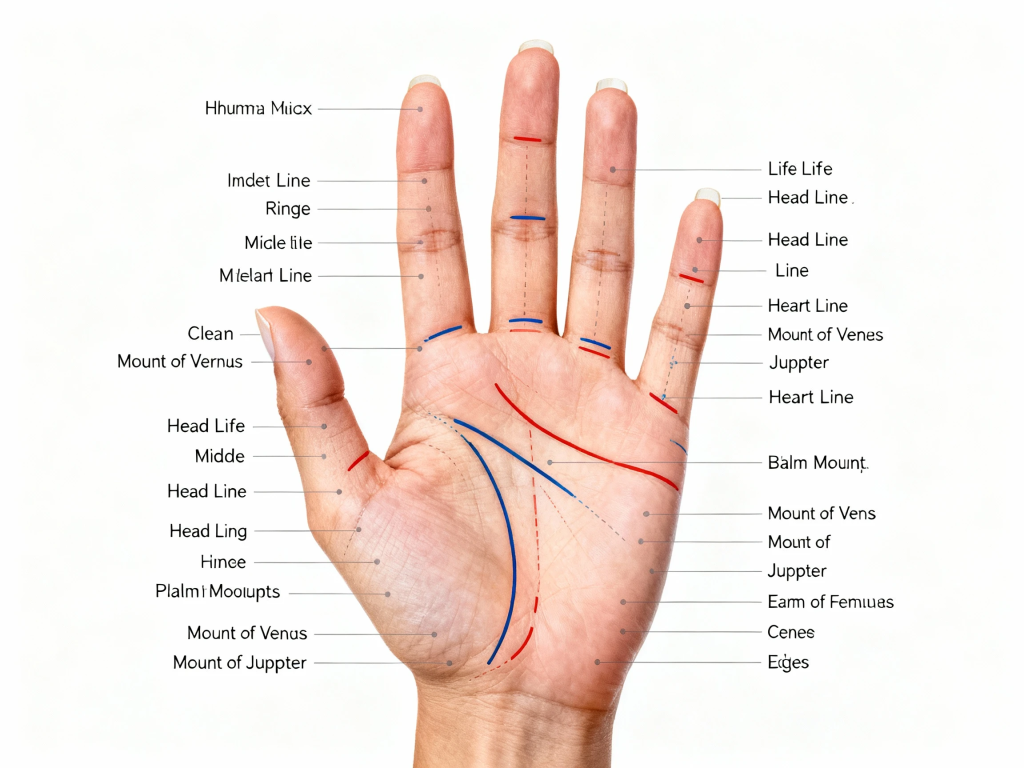
Palmistry Essentials: Key Eastern & Western Terms
Below are the foundational terms used in palm reading. Eastern terms are listed with their Western equivalents for comparison.
The Three Major Lines
- Life Line (Eastern) / Life Line (Western) — Curves around the base of the thumb.
- Wisdom Line (Eastern) / Head Line (Western) — Runs horizontally across the center of the palm.
- Heart Line (Eastern) / Heart Line (Western) — Located above the Head Line.
Major Palm Areas (Mounds)
- Venus Mount (Eastern) / Mount of Venus (Western) — The fleshy area at the base of the thumb.
- Jupiter Mount (Eastern) / Mount of Jupiter (Western) — Found below the index finger.
- Saturn Mount (Eastern) / Mount of Saturn (Western) — Located below the middle finger.
Special Marks & Symbols
- Common symbols include formations like the “Teacher’s Eye” or “Mystic Eye” (Eastern), triangles, and stars, which are interpreted similarly in both traditions as special markers.
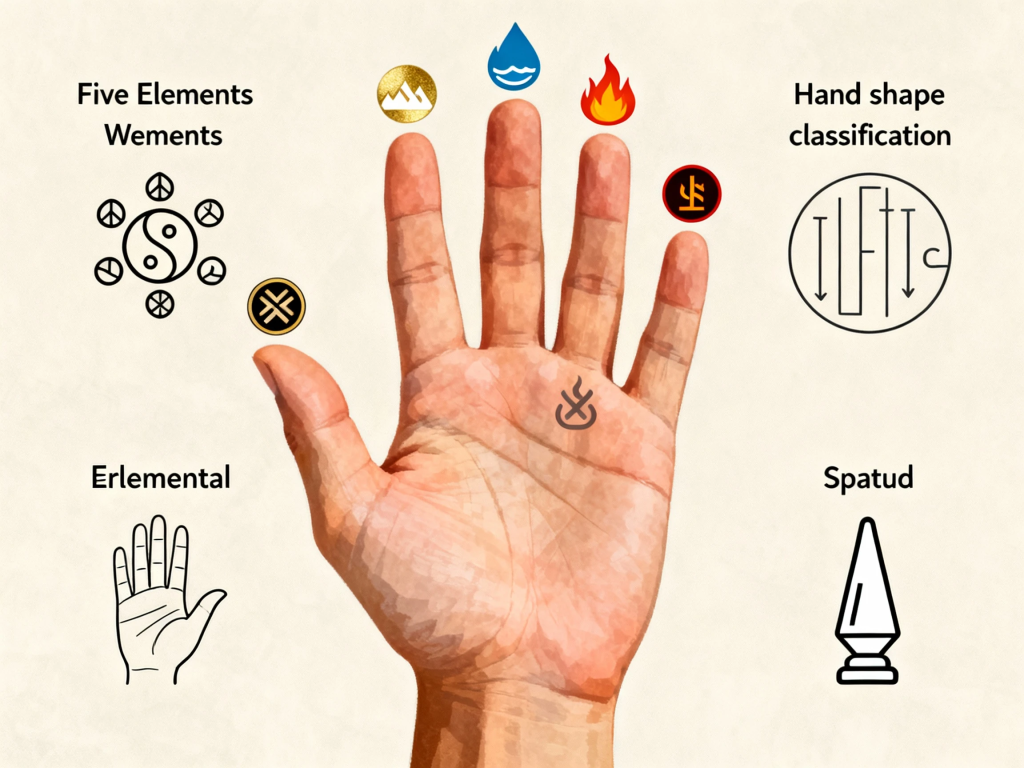
Part 2: The Life Line – An East-West Perspective
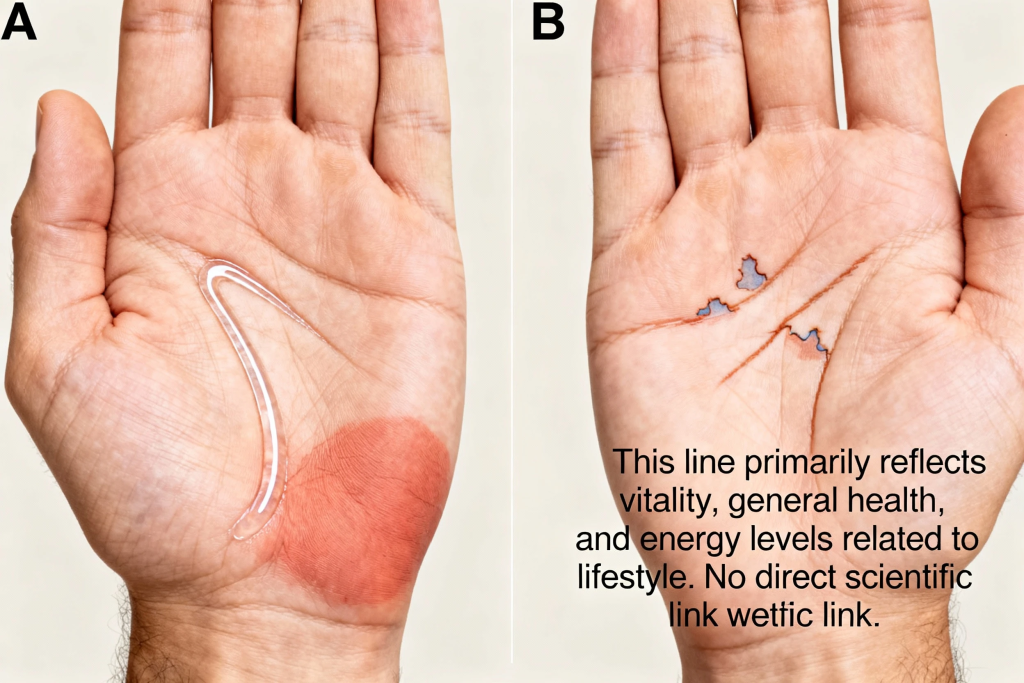
| Perspective | Eastern (Palmistry) Interpretation | Western (Palmistry & Scientific Perspective) |
| Core Meaning | Called the “Earth Line,” it is thought to represent one’s foundation, vitality, general health, and physical stamina. | Seen as an indicator of a person’s energy, resilience, overall health tendencies, and enthusiasm for life. |
| Length & Curve | Long, deep, with a broad curve: Associated with strong vitality and good physical resilience. Short, shallow, with a narrow curve: May suggest a more sensitive constitution, requiring greater attention to well-being. | Length is not related to lifespan. The curve’s shape may be connected to the hand’s or thumb’s range of motion and grip strength. |
| Clarity & Markings | Clear and continuous: Suggests a stable life with consistent energy. Chained, broken, or featuring “islands”: Often interpreted as periods of health fluctuation, stress, or change. | Clarity and depth can be influenced by skin elasticity, subcutaneous fat, and manual work. Breaks are sometimes noted alongside significant physical or lifestyle changes. |
| Scientific Insight | No direct scientific evidence supports its use for predicting longevity. | While certain palm features (like a single transverse crease) have a weak statistical link to some genetic conditions, they are not diagnostic. The line is better viewed as a “record of lifestyle”—shaped by use, health, and possibly heredity. |
Part 3: The Head Line – An East-West Perspective
| Perspective | Eastern (Palmistry) Interpretation | Western (Palmistry & Scientific Perspective) |
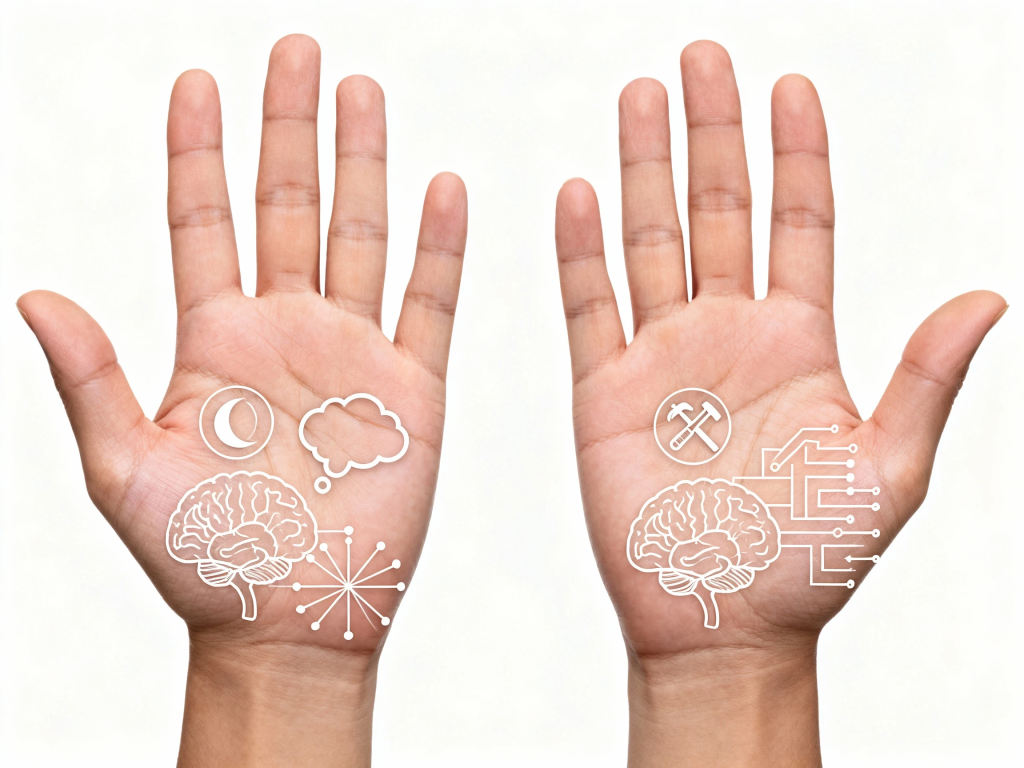
| Core Meaning | Known as the “Human Line”, it is associated with one’s thinking style, intellectual tendencies, learning ability, and decision-making. | Viewed as reflecting a person’s thinking patterns, ability to focus, approach to learning, and way of communicating. |
| Length & Direction | Long and straight: Strong logical thinking, good at analysis and focused study. Short and straight: Quick, practical thinking with a focus on action. Curving downward toward the wrist: Imaginative, intuitive, and often linked to creative or artistic leanings. | The direction of the line may loosely relate to cognitive style (e.g., analytical vs. intuitive), but this is not scientifically proven. It is often interpreted metaphorically as a “map of thinking habits.” |
| Clarity & Branching | Clear and deep: Suggests clear, organized thought and good concentration. Fragmented, branched, or chain-like: Indicates an active, versatile mind with many interests, though possibly prone to distraction. | Line depth and complexity are influenced by genetics and skin structure. There is no scientific evidence linking specific line patterns to intelligence or cognitive ability. |
Part 4: The Heart Line – An East-West Perspective
| Perspective | Eastern (Palmistry) Interpretation | Western (Palmistry & Scientific Perspective) |
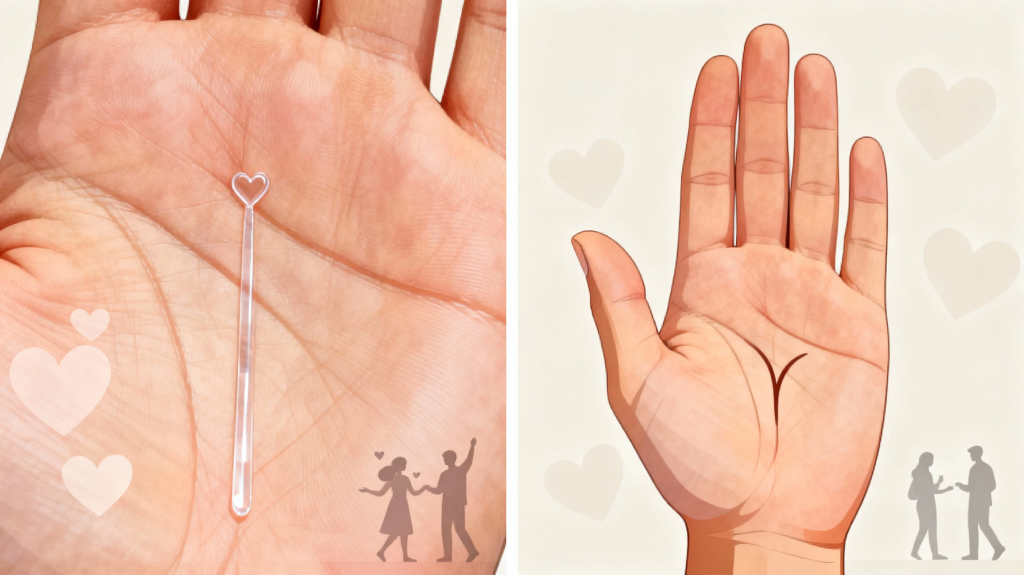
| Core Meaning | Known as the “Heaven Line”, it is thought to reflect emotional patterns, relationships, personal values, and aesthetic preferences. | Viewed as relating to emotional expression, attitude toward relationships, values, and romantic tendencies. |
| Starting & Ending Points | Begins below the index finger: Seeks meaningful, idealistic connections in relationships. Begins below the middle finger: More practical and individual-focused in relationships. Ends between two fingers: Suggests emotional balance. | The starting and ending points vary widely and may loosely reflect one’s emotional needs or relationship style—acting as a kind of “map of emotional expression.” |
| Form & Features | Clear, deep, and long: Suggests deep and steady emotions. Chained or marked with “islands”: Indicates emotional sensitivity and depth; may also reflect complex experiences. Forked at the end: Suggests a balance between emotional and rational expression. | Palm lines form during fetal development. Their patterns may correspond to early development of the nervous and circulatory systems, which could indirectly relate to emotional disposition. |
Part 3: A Complete Picture: Combining Palmistry and Face Reading
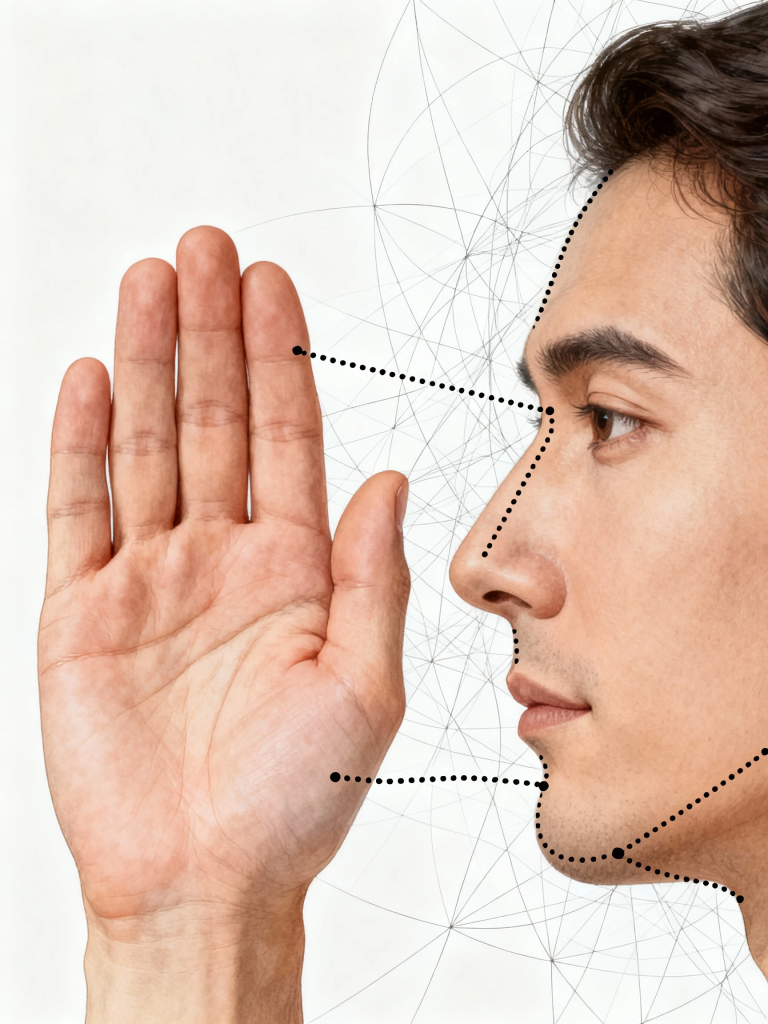
Face reading and palm reading both belong to the study of external signs—the idea that we can look inward by observing outward clues. By considering the hand and face together, you can gain a more complete picture of a person.
1. Looking for Consistency
Sometimes, facial and palm traits seem to align. For example:
·A person with bright, focused eyes (often linked in face reading to clarity and sincerity) may also have a clear, deeply etched Head Line in their palm.
·Someone with a strong, defined chin (associated with willpower in face reading) might also show a deep and well-formed Life Line.
·When features match across the face and hand, they may point more strongly to certain personality tendencies.
2. Static vs. Dynamic Clues
The face is often seen as revealing our deeper, more long-term nature—the traits we are born with or develop over many years. The lines on our hands, however, can change subtly over time. This makes palm reading a more dynamic practice, sometimes reflecting our current mindset, stresses, or recent life experiences. In other words, the face may show the “big picture,” while the hands can reveal the ongoing story.
3. Understanding the Whole Person
Think of the face as your social interface—how you express yourself to the world. The hand, in contrast, is a tool for action and creation. Looking at both together can help you understand how a person’s inner world (seen in the face) connects—or sometimes conflicts—with their outer actions and choices (suggested by the hand).
Part 4: What Science Says About Your Palm
1. How Palm Lines Are Formed: A Record from Before Birth
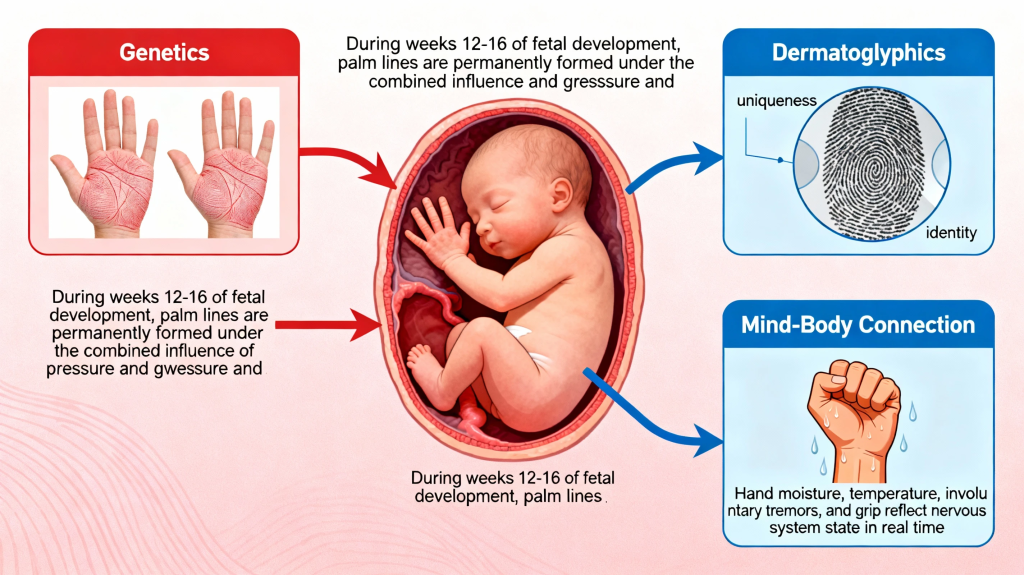
Palm lines (also called dermal ridges) develop between the 12th and 16th week of pregnancy. They are shaped by a combination of genetics and conditions in the womb—such as the pressure of the amniotic fluid or the position of the fetus’s hands. This early formation explains why your palm prints are unique and permanent, making them valuable tools in forensics and identity verification.
2. Palm Lines and Health: The Medical Connection Is Limited
While some very specific and rare line patterns (like a single deep crease across the palm) may occur more often in individuals with certain chromosomal conditions, these patterns are never diagnostic. Such associations are statistical and apply only to a tiny minority of cases. In general, you cannot tell someone’s health status from their palm lines alone.
3. The Real Science Lies in How We Use Our Hands
Far more telling than the static lines are the dynamic signals our hands give off. These belong to the well-studied field of nonverbal communication and behavioral psychology.
·A handshake can suggest confidence, control, or social style.
·Small gestures—like rubbing your hands or touching your face—can hint at nervousness, deep thought, or even attempts to conceal something.
·The condition of your skin—whether it’s dry, clammy, or discolored—can reflect circulation, stress levels, or general health.
·In short, how your hands move and feel often reveals more than the lines they carry.
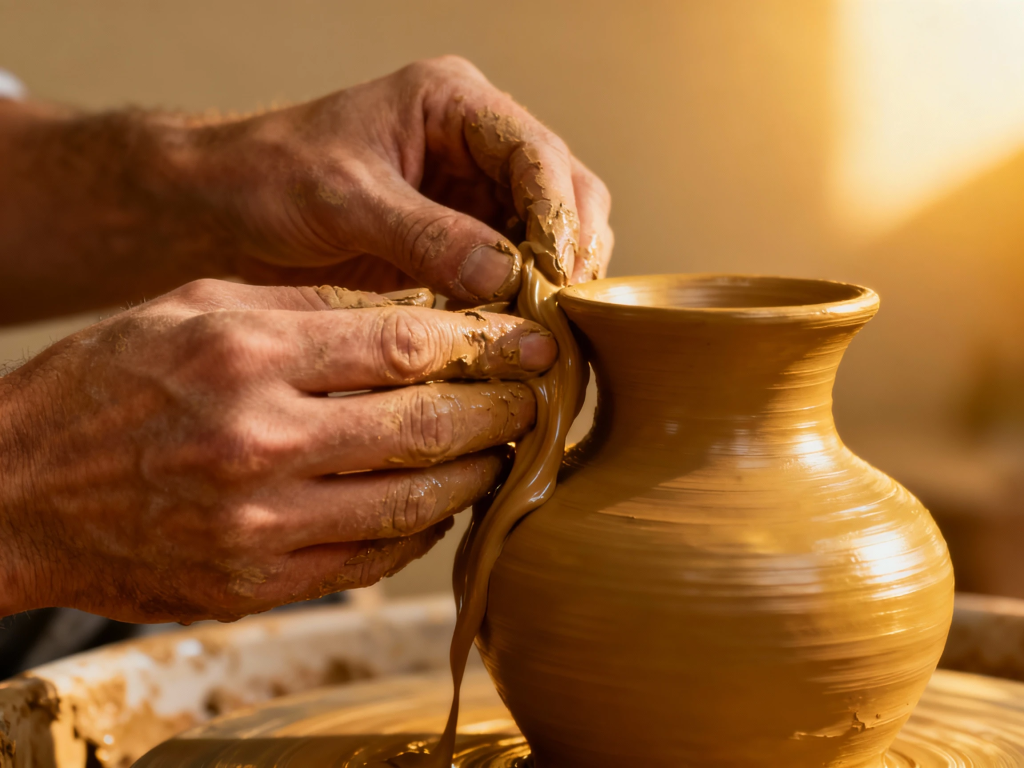
The true value of palmistry lies not in predicting a fixed future. Like face reading, it offers insight into your natural tendencies—like an early map of your potential.
But it is your choices, actions, and the work you do with your own two hands that truly shape your path. The lines may sketch a rough map, but you are the one who holds the pen—you decide the route, overcome obstacles, and create your story.
Rather than worrying about the length or depth of a line, focus on making your hands stronger, more skillful, and more caring—to learn, create, hold, and help others. When you fill your life with purposeful action, you create your own best “palm print”: one marked not by lines, but by experience, growth, and the light you bring into the world.