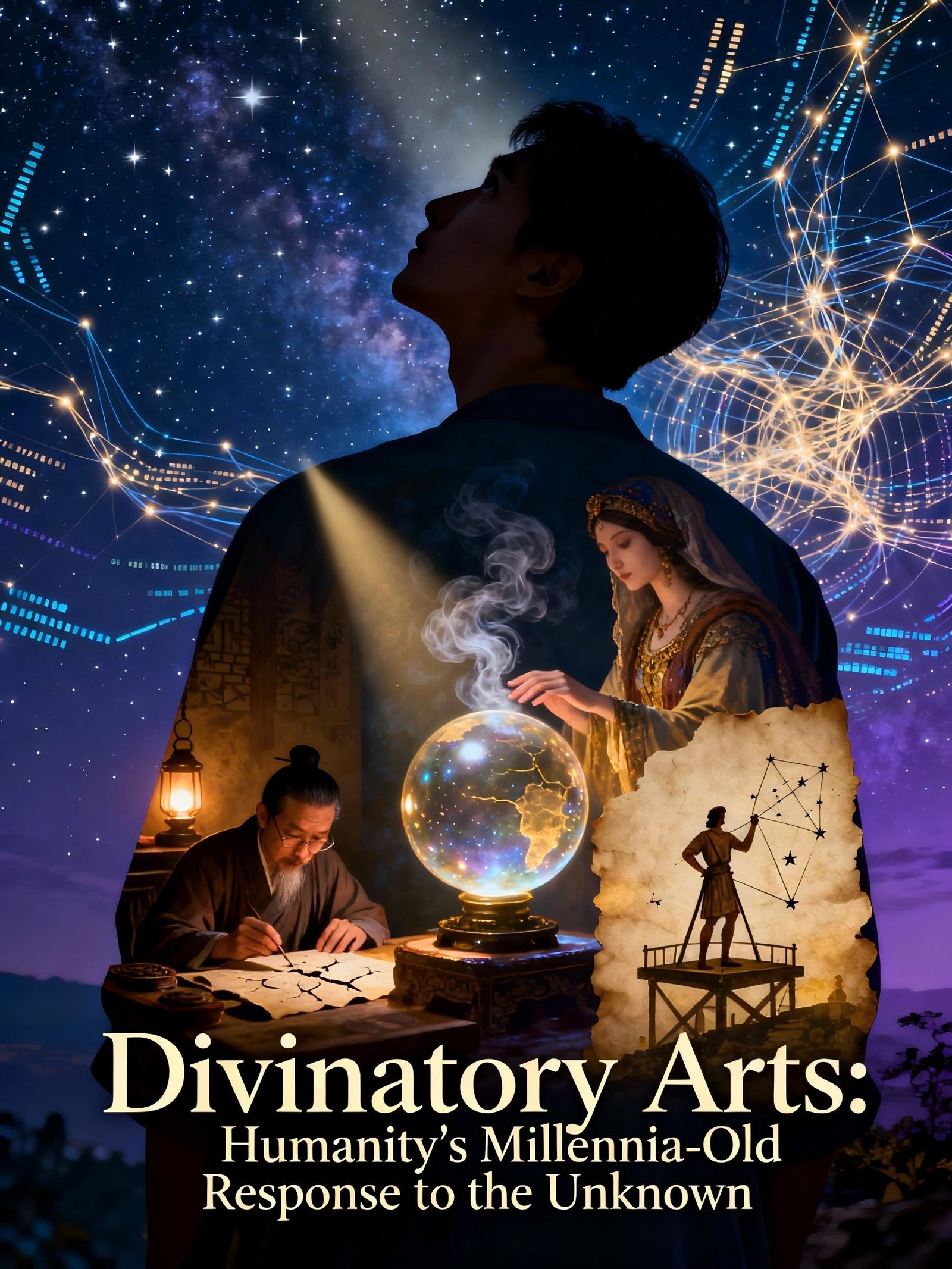
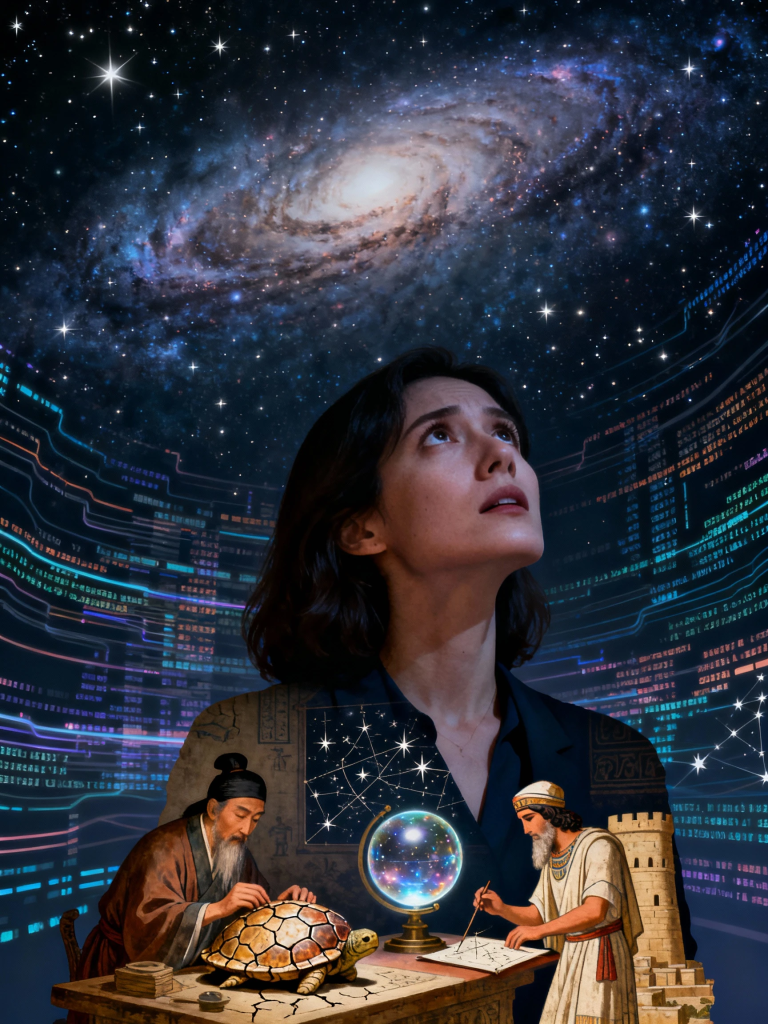
From the casting of lots and the reading of birth charts in the East, to the shuffle of Tarot cards in the West—from the ancient practice of scapulimancy to the daily delivery of modern horoscopes—the quest to divine the future is a thread woven throughout human history.
But is this merely a relic of primitive superstition, or does it reveal something deeper about how people have always sought to understand their world and their place within it? By looking across cultures and eras, we can explore why these practices emerged, how they have transformed, and what role—if any—they continue to play in our age of science.
I. Origins: Why Have Humans Always Sought to “Know the Future”?
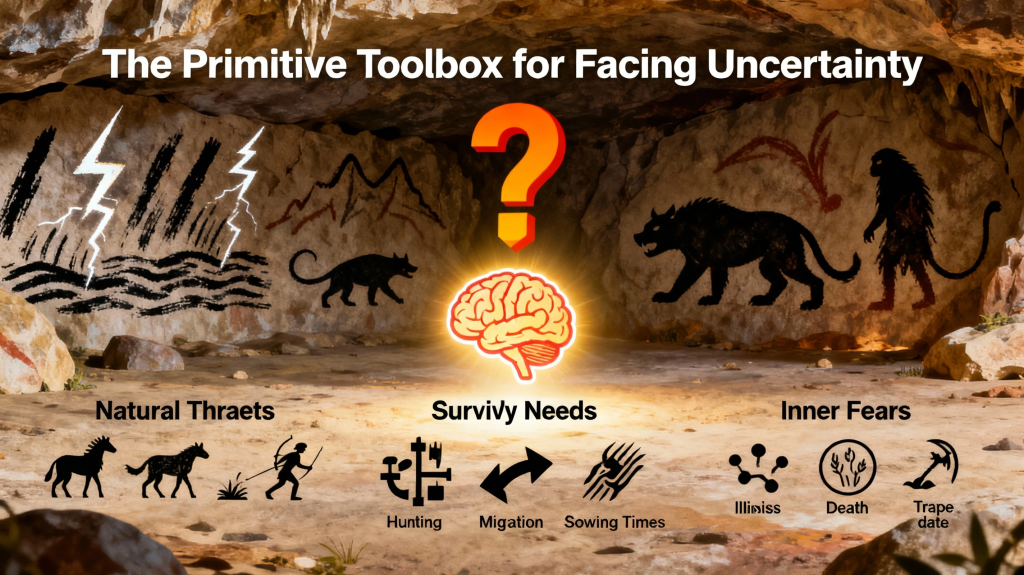
Long before the rise of science, people lived in a world of profound uncertainty. In its earliest forms, divination was less about entertainment or deception and more like a toolkit for making sense of life. It grew out of three deep human needs:
1. The Need for an Explanation
When faced with the unexplainable—natural disasters, sudden illness, vivid dreams—the human mind seeks cause and meaning. Finding a pattern, even a false one, feels safer than accepting pure randomness. For example, linking a comet in the sky to the death of a ruler created a story that helped people cope with events that felt chaotic and frightening.
2. The Need for Prediction and Control
People have always wanted to glimpse what lies ahead—to avoid danger and seize opportunity. In ancient times, with little information to go on, systems like reading stars or cracks in bones provided what seemed like objective guidance. This “oracle” offered a way to make tough choices—when to plant crops, whether to go to war—while easing the burden of personal responsibility.
3. The Need for Order and Meaning
Life can feel random and chaotic. Divination places personal experience—your birth date, a drawn card—into a larger, pre-existing story (like the balance of natural elements or the hero’s journey). This creates a sense that life is not accidental, but part of a coherent pattern. In doing so, it helps soothe the anxiety that comes with feeling adrift in an uncertain world.
II. Eastern & Western Paths: Two Ways of Seeking Answers
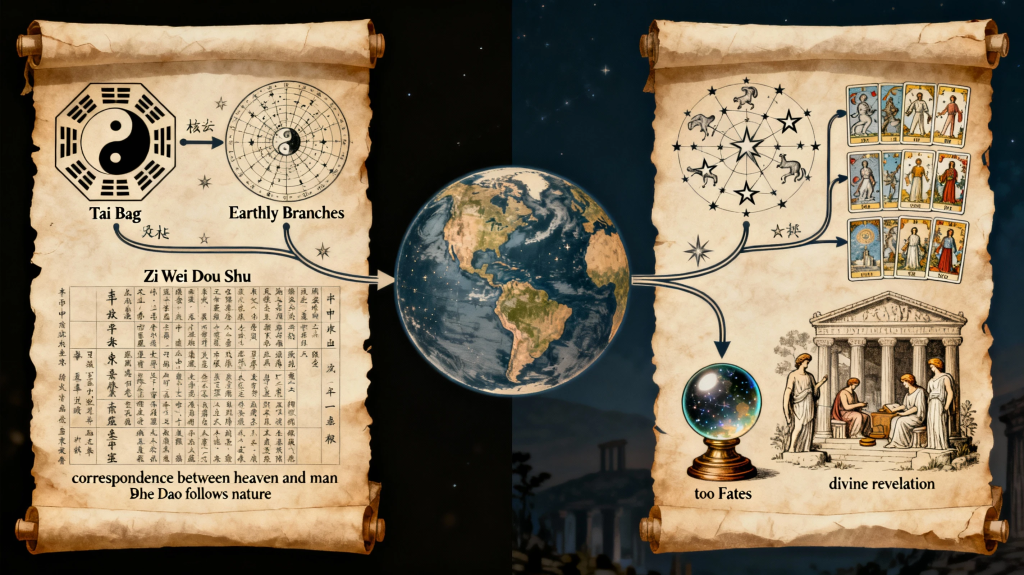
Though sharing a common goal, Eastern and Western traditions developed very different approaches to divination, each rooted in its own worldview:
| Aspect | Eastern Divination (Chinese Traditions) | Western Divination |
| Philosophical Core | Based on the idea that humans are a microcosm of the universe. Personal destiny is seen as deeply connected to natural cycles, seasonal changes, and the flow of elemental energies. | Rooted in the belief that fate is shaped by divine or higher forces. Guidance is conveyed through symbols—like cards, stars, or crystals—that carry messages from beyond. |
| Method & Approach | Relies on calculation and systematic analysis. Uses birth details, astrological charts, or classic texts (like the I Ching) to map out long-term life trends and cycles. Distinguishes between fixed destiny and changing fortune. | Emphasizes symbolism and intuitive revelation. Often involves random selection (Tarot, runes) or reading celestial signs to gain insight into current situations or specific questions. |
| Key Systems | Ba Zi (Four Pillars of Destiny): Analyzes life energy based on the traditional calendar. Zi Wei Dou Shu: A detailed star-based astrology system. I Ching: Uses hexagrams to explore situations philosophically. | Astrology: Interprets personality and life patterns from planetary positions at birth. Tarot: 78 symbolic cards used for reflection and guidance. Tools like Ouija boards or dowsing rods: Aim to connect directly with unseen forces. |
| Relationship with the “Divine” | Acts more like a harmonizer with natural laws—seeking to align with the rhythms of the cosmos (the Dao). | Acts more like a receiver of divine will—seeking guidance, answers, or grace from a higher power. |
III. A Modern Lens: The Psychology Behind Fortune-Telling
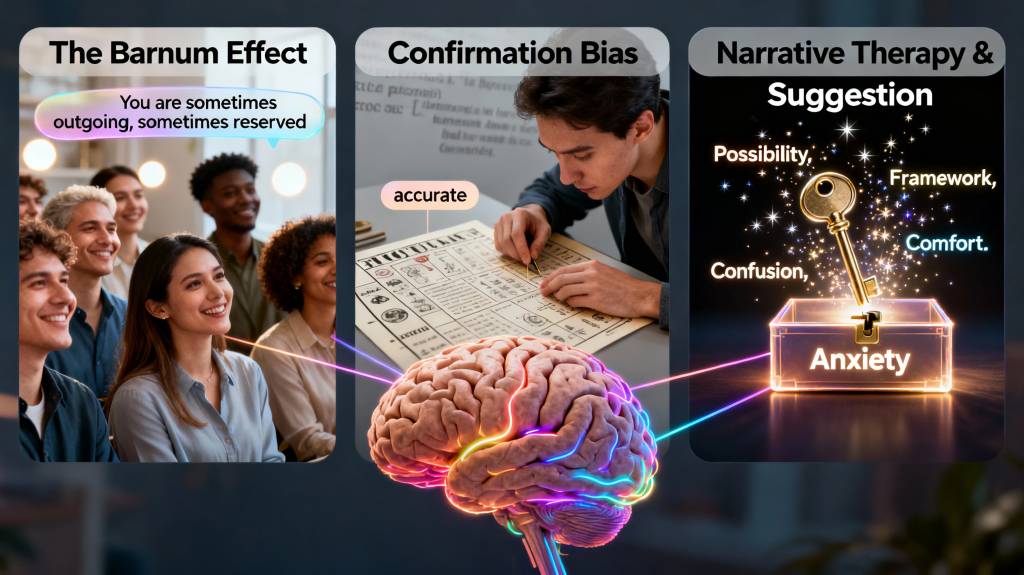
Science has uncovered why fortune-telling often feels so real—and it’s all about how our minds work, not magic.
1. The Barnum Effect
We’re wired to accept vague, general statements as deeply personal truths. Statements like “You seem confident, but sometimes doubt yourself inside” could apply to nearly anyone—which is exactly why horoscopes or personality profiles often feel eerily accurate.
2. Confirmation Bias
We naturally notice and remember details that match what we already believe—and overlook what doesn’t fit. If a fortune-teller makes ten statements and two resonate, we’re likely to focus on those two and forget the rest, reinforcing the feeling that the reading was “right.”
3. The Power of Story and Suggestion
At its core, a good divination system offers a story—a way to make sense of life. When people feel lost, anxious, or stuck, this narrative can:
·Reduce anxiety by offering an explanation, even if it’s symbolic.
·Inspire action, turning predictions into self-fulfilling prophecies. If you’re told “this is a year for new beginnings,” you might start looking for opportunities—and create them.
·Provide a kind of therapy. Simply sharing your worries with a fortune-teller—or even an app—can feel like a weight lifted. The guidance you receive often includes hopeful reframes or gentle encouragement, much like a counseling session.
Conclusion: Divination as a Mirror for the Mind
Ultimately, practices like palm-reading, astrology, or Tarot work not because they predict the future, but because they reflect our own thoughts, fears, and hopes back to us. They are less about magic and more about meaning—tools humans have long used to navigate uncertainty, find comfort in pattern, and glimpse their own potential. In that sense, the “magic” was inside us all along.
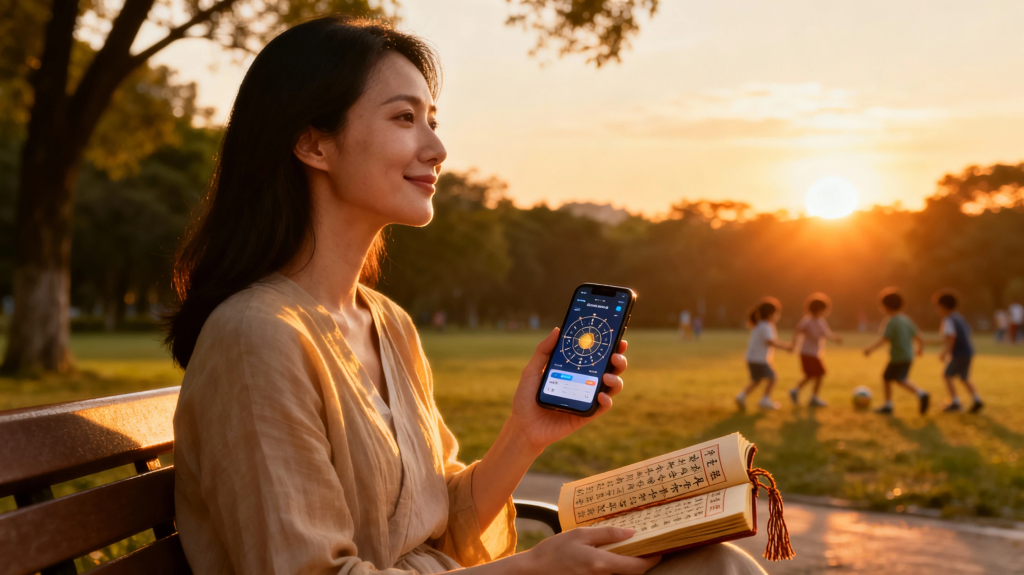
So, perhaps divination today isn’t really a “science” for predicting the future. Instead, it works more like an age-old cultural-psychological practice and a ritual of meaning-making.
What it reveals is something timeless about being human: our need to find patterns in the randomness of life, meaning in our struggles, courage when we face choices, and a story that makes our existence feel connected.
A wise and balanced approach might look like this:
·Appreciate the cultural wisdom and rich symbolism found in traditions like the I Ching or astrology.
·Understand how it works psychologically so you won’t be misled by empty promises or scams.
·Use it as a mirror for self-reflection or a source of inspiration—not as a strict guide for what to do.
In the end, the most reliable “algorithm of fate” may not come from ancient charts or cards. It comes from knowing yourself, taking positive action, and having the courage to step into the unknown—even when you know no one can truly predict what’s ahead.
Because the greatest certainty about tomorrow doesn’t come from reading signs. It comes from what we choose to build today.